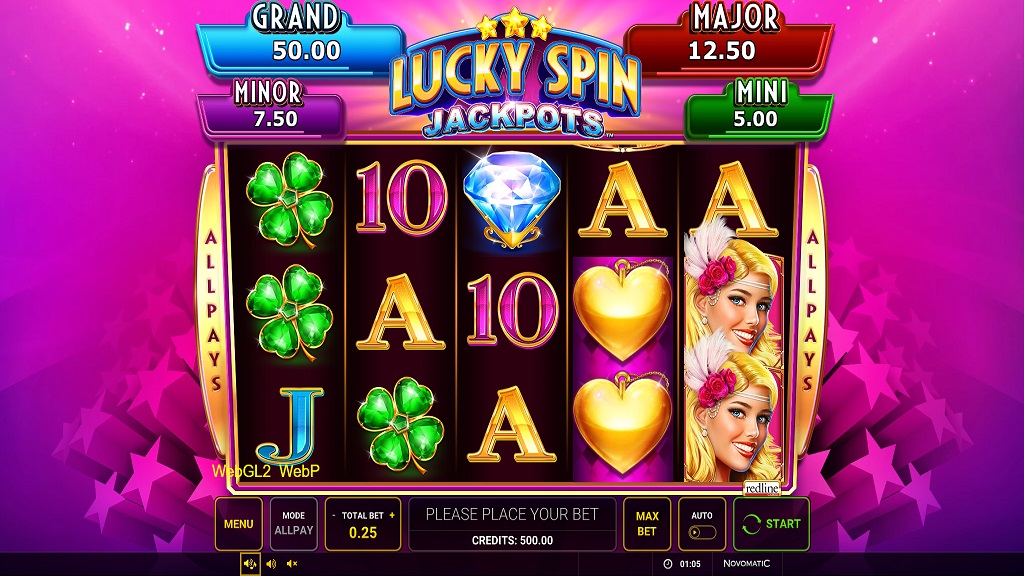
Let’s open up the server rack and see what makes Jackpot Fishing Live Sports Events Slot tick. For those who have played it, the attraction is evident: a lively, colorful underwater world where every cast could lead to a life-changing prize. But beneath that enjoyment lies a serious engineering effort. I want to walk you through the technical design that keeps this game running, from a single spin to those enormous, communal jackpots.
1. Overview: The Idea Behind the Reels
Jackpot Fishing Slot had a big goal from the start. It wanted to take the communal, animated fun of an fishing arcade game and integrate it directly with the intense mechanics of a progressive slot game. That idea shaped the whole technical strategy. You can’t build a communal, persistent world where everyone chases the same prize with old-fashioned, independent slot machine code.
The key technical issue was instantaneous interaction. All actions a player makes—clicking spin, reeling in a fish—must affect the communal game environment right away. Your screen must display other players’ catches the moment they happen, and the global jackpot counter needs to rise with every bet, everywhere, at once. The system was designed for speed and unwavering reliability.
3. Multiplayer Synchronization Layer: Tossing in Unison
That sensation of being in a lively, active ocean is built by a specialized synchronization layer. Each player’s gadget keeps a constant WebSocket connection going to the game servers. When you toss your line, that message zips to this layer, which right away tells every other player in your session. That’s how everyone observes the same schools of fish and the same motions at the same time.
This layer groups players into manageable groups or rooms. It aligns game state smoothly, transmitting only the changes (like a fish swimming or a new bubble appearing) rather than redrawing the entire scene every second. This maintains data use minimal, which is crucial for players on phones using mobile data.
2. Core Gameplay Engine: The Center of the Experience
All depends on the engine. View it as the game’s brain, and it runs on the server side. This robust C++ module manages every calculation. It calculates the result of your spin, what fish you come across, and how much you win. Running this logic on the server guarantees fairness; players can’t cheat by interfering with settings on their own device.
Predictable Logic and Random Number Generation
Honest gaming relies on the number generator. This is far from a simple algorithm. It’s a certified system that generates the result the instant you press the start button. That outcome determines both the slot symbols on your reels and the specifics of any fish you land—its type, its value, its multiplier. The engine processes all of this linked math in one go, using established probability models.
Instant Event Processing
The engine is constantly busy. It processes a stream of events from players: lines thrown, fish caught, items used. It determines these actions against the live game state within milliseconds. If multiple players seem to hook the same trophy fish, the server’s official clock decides who actually landed it first. This speed is what makes the game appear seamless and competitive, not slow or round-based.
4. Progressive Jackpot Mechanism: Constructing the Prize Pool
The most exciting part, the progressive jackpot, is also one of the most isolated pieces of the architecture. It functions as its very own secure microservice. A small portion of every single bet made on the game, from any particular player, gets sent to a primary prize pool. This service totals them continuously, refreshing that huge, tempting jackpot number you see on screen in real time.
Jackpot Prize Triggers and Win Verification
Achieving the jackpot entails a specific trigger, like catching a legendary golden fish or landing a ideal set of symbols. The gameplay engine identifies the trigger and submits a win claim to the jackpot service. That service verifies everything, ensures the win is legitimate, and then performs a critical operation: it awards the enormous sum while simultaneously restoring the pool to its seed value, all in one atomic transaction. This eliminates any chance of the same jackpot paying out twice. Then it fires off the festive alerts everyone sees.
7. Expansion and Cloud Infrastructure
The platform is built to expand horizontally, not just upward. It commonly functions on a cloud environment such as AWS or Google Cloud. Core services—the game platforms, the synchronization layers, the jackpot module—are packaged as containers using Docker and managed by an management system like Kubernetes. When player numbers increase sharply, the solution can automatically spin up more instances of these containers to handle the load.
Load Balancing and Regional Deployment
Players do not connect straight to a single game server. They access smart load balancers that spread connections uniformly across a pool of servers. This avoids any single machine from being overwhelmed. To ensure the game snappy for a global audience, these server groups are placed in various locations globally. A user in London connects to nodes in Europe, while a player in Sydney links up to machines in Asia, cutting down lag.
6. Data Persistence and Player State Handling
When you shut down the game, your progress is saved. A persistence layer takes care of this with different tools for various tasks. Your persistent profile—your name, your overall coin balance, your collected lures and rods—resides in a scalable SQL database. This emphasizes data safety and consistency.
But the fast-moving data of your ongoing session lives in an in-memory data store like Redis. This is where your current score, the fish currently on your line, and other temporary states are kept, permitting immediate reads and writes. When you win, a transaction makes sure your persistent balance is updated and a log entry is written simultaneously. All financial actions is recorded in an immutable audit log for security, customer support, and compliance reviews.
5. Server-Client Communication Model
This game employs a dual approach to communication for both safety and speed. Essential actions—making a bet, withdrawing, claiming a jackpot—are sent over safe HTTPS connections. This safeguards the data from tampering. At the same time, all the dynamic stuff, like fish gliding by, flows through the speedier, persistent WebSocket pipe.
The model is rigorously server-authoritative. Your device is fundamentally a clever display. It shows you what the server states is happening. You submit your commands (a button press), the server carries out all the computations, and then it notifies your client the result. This design makes cheating virtually out of the question, as the server is the only source of truth for your funds and the game state.
Section 8. Safety and Fairness Framework
Gamer trust is paramount, thus security is embedded in all layers. All data traveling between your terminal and the backend is secured via modern TLS. The core RNG and jackpot mechanics operate in restricted, sandboxed environments. External auditing companies verify and validate the randomness of the RNG system and the statistical fairness of the gaming experience.
Transaction processing is processed by specialized, PCI-compliant partners. These platforms are entirely distinct from the game infrastructure. Fraud monitoring systems look for abnormal patterns of activity, and gamer data is handled according to strict privacy policies. The objective is to build a safe environment where the only unexpected thing is what you land next.
The ninth Ongoing Deployment and Real-Time Operations
The framework supports a continuous deployment pipeline. Programmers can implement a new type of fish, a unique event, or a game adjustment without bringing the full game offline. They frequently use a canary deployment strategy: the patch goes to a minority of gamers first. The team tracks for issues or slowdowns, and only deploys it to everyone once it’s verified as stable.
A extensive monitoring system monitors the entire operation. Control panels present live graphs of server performance, error counts, transaction rates, and how many players are online. If an issue starts to go wrong—for example, delay increases in a geographic cluster—system alerts notify the ops team. This constant vigilance is what keeps the online world from breaking down. The game must remain ready for the next throw.

Sale Items
-
 Mechanic QC-20 BGA IC Glue Remover Liquid
Original price was: ₨ 700.00.₨ 600.00Current price is: ₨ 600.00.
-
 REFOX FM-50 OCA machine for Mobile Tab big size with best in quality 12.9-inch LCD Edge & Flat Screen OCA Lamination Machine Built-in Bubble Removal Function
Original price was: ₨ 210,000.00.₨ 200,000.00Current price is: ₨ 200,000.00.
-
 U-IP10 AMAOE BGA STENCILS IP14-A16 FOR IP14\PLUS\PRO\MAX 0.12MM
Original price was: ₨ 450.00.₨ 400.00Current price is: ₨ 400.00.
-
 RELIFE E1 Carbon fiber electric screwdriver set
Original price was: ₨ 2,400.00.₨ 2,300.00Current price is: ₨ 2,300.00.
-
 U-IP9 AMAOE STENCILS IP13-A15 FOR IP13\PRO\MAX\MINI 0.12MM
Original price was: ₨ 450.00.₨ 400.00Current price is: ₨ 400.00.
-
 Samsun S22 Ultra double layer stencils Amaoe brand for Reballing
₨ 450.00
-
 Mechanic SD360 No-clean Flux Solder Paste with Push Rod for PCB SMD BGA Soldering Tools
₨ 450.00
-
 YCS Repairman 3 Seconds Quick Dry oil (transparent)
Original price was: ₨ 400.00.₨ 350.00Current price is: ₨ 350.00.
-
 SUNSHINE TB-03S INFRARED RAPID THERMAL CAMERA TB-03S
₨ 37,000.00
-
 LB Tag-on battery repair flex cable 11PRO-11PM
₨ 750.00
Products
-
 YCS DC25 Battery Booster IP& Andriod
₨ 2,300.00
-
 YCS D03 Bootcable
Original price was: ₨ 2,500.00.₨ 2,200.00Current price is: ₨ 2,200.00.
-
 LB Cleaning adhesive sheets LB-C100
₨ 600.00
-
 LB Ultrasonic Cleaner Enhanced Version LB-U8 Pro
₨ 5,500.00