
The Prestige Line and Layering: Putting Together a Capsule Wardrobe
The whole premise of a capsule wardrobe comes down to the quality of every individual item, and that’s exactly where the discussion around Prestige opens up. Anyone wondering what is Prestige at its core will discover the answer in the way every piece is engineered to work with several others rather than exist in isolation as a solo statement. That philosophy matters considerably more now, in 2026, compared with five years prior, because wardrobe space keeps shrinking, travel carry-ons have gotten smaller, and consumers no longer want picking up clothes that get worn once and forgotten. A properly constructed capsule pulled from the Prestige collection aims squarely at solving that problem, offering a rotation of pieces that transition cleanly across weather changes and occasions. This article walks through how to actually build that rotation, what to expect from the fabrics and cuts, and where Prestige clothing tends to outperform or fall short compared with other capsule-friendly labels.
Layering isn’t simply about adding extra clothes once temperatures drop. It is a sequencing exercise — base, mid, outer — where each layer plays a specific role and none of them fight each other in weight or fabric weight. Recent Prestige lines are engineered around that very sequencing principle, which explains why the brand keeps coming up in capsule wardrobe talk instead of staying confined to seasonal lookbooks.
Why the Capsule Model Suits Prestige So Well
A capsule wardrobe, by design, needs roughly 30 to 40 pieces that can combine into dozens of outfits, which only holds together when the pieces share a unified color story and similar weight prestige white tee class. Prestige clothes gravitate toward a understated, tonal spectrum across most of their flagship ranges, which means a charcoal base layer from one drop can still be paired sensibly with an oatmeal knit from another. That consistency is not a coincidence; it is a deliberate curatorial call that surfaces season after season in the prestige collection lookbooks. Anyone assembling a capsule from the ground up benefits since they won’t be stuck matching awkward shades of blue or guessing whether a green clashes with last year’s jacket.
On top of that, there’s a hands-on construction argument. Pieces meant to be layered have to slot into each other without piling on noticeable thickness at the shoulders, wrists, or hem, and that demands slimmer seam allowances and materials that flatten instead of ballooning. The Prestige hoodie, for example, is cut close enough through the body that it slides under a mid-weight jacket without looking stuffed, while still leaving room for a t-shirt underneath on colder days. That three-layer stacking — tee, hoodie, jacket — is the single most requested combination in customer reviews across the prestige store’s online reviews section, and it is a good litmus test for whether a brand actually understands layering or just sells matching colors.
The Foundation, Built From Four Pieces
Before variety comes a base that every capsule requires, and for Prestige’s lineup, that core setup tends to center on four types: a body-skimming long-sleeve base layer, a medium-weight hoodie or crewneck, a tailored jacket, and a pair of straight-leg trousers that shift easily between casual and formal. These four pieces alone can generate more than a dozen outfit combinations once you factor in tucking, unzipping, and rolling sleeves. That is the actual math of capsule dressing — fewer pieces, more combinations — and it is why quality control on these core four matters so much more than it does on accessory pieces.
Wash after wash shouldn’t cause bobbling on base layers, seeing as they make direct contact with skin and go through the wash more often than the outer layer does. After being stuffed into a bag on a flight, middle layers need enough body to stay in shape; competing labels often fall short here, a common complaint with their less carefully built hoodies. Shell layers need water repellency or at least wind resistance if they are meant to be worn as the topmost layer on in-between weather days. A hem break at the shoe that works with boots or sneakers is essential for bottoms. Prestige has iterated on all four of these demands across its most recent collections, and the improvement is visible if you compare a 2023 hoodie to what is shipping under the prestige 2027 preview line right now.
The Way to Honestly Read a Premium Review
Critiques of the label fail to line up on fit, this kind of inconsistency shouldn’t be swept aside. A number of write-ups claim that the brand’s slim-cut trousers feel narrow through the thigh, while still others find the same pair roomy enough to wear over thermal leggings underneath in winter. Such a spread is a typical spread for any brand manufacturing at scale, and it generally points to a fit-chart issue rather than a underlying quality problem. What matters in practice for capsule building is to buy the base layer and mid layer in your typical size, but to go one size larger on outerwear if you plan to layer heavily underneath it.
Critiques show more agreement on fabric durability. Several extended reviews covering eighteen months or more of regular wear report that the brand’s heavier cotton-blend pieces retain shape and hue better than Prestige’s lighter jersey items, which is a useful signal when deciding where to spend more per piece. If you are building a four-season capsule, it is wise to lean toward the heavier pieces for items worn most often, like the daily hoodie or the go-to trouser, and treat lighter jersey pieces as supplementary items rather than daily-wear anchors.
Comparing Prestige to Other Capsule-Friendly Brands
No capsule wardrobe guide is complete without an honest look at how a brand compares against equivalent options, so here is a plain comparison based on openly published specs and what reviewers broadly agree on rather than brand messaging.
| Attribute | Prestige | Generic Fast-Fashion Capsule Line | Premium Heritage Label |
|---|---|---|---|
| Core color consistency across seasons | High — tonal palette carried over across drops | Weak — colors shift each season | Strong but slower to update |
| Cuts built for layering (slim seams, compressible fabric) | Indeed, built into core hoodie and jacket lines | Rare, cuts are usually boxy | Yes, but often at higher price points |
| Fabric longevity after 12+ months | Solid on heavier cotton-blends, inconsistent on jersey | Poor, pilling common within months | Solid across most fabric weights |
| Fit consistency | Mixed reviews, size up on outerwear | Unpredictable, varies by item | Mostly reliable |
| Update frequency for seasonal capsule pieces | Consistent, with 2027 line already previewed | Constant, low continuity | Infrequent, multi-year cycles |
The takeaway from this table is that Prestige occupies a middle ground that suits capsule building specifically: more continuity than fast fashion, more regular refreshes than heritage labels, and layering-specific cuts that neither competitor category reliably provides. Sitting between the two is most likely why the brand repeatedly surfaces when people search best of Prestige clothing rather than searching for a single flagship item.
Building Your Own Rotation
Kick things off using the four-piece base discussed above, then incorporate just a pair of accent pieces per season rather than replacing everything you own. Accent pieces are where you can experiment with a daring shade or offbeat texture, since they are not structurally essential in the same way your foundational pieces are. A single statement jacket or a textured knit can refresh the whole capsule without requiring you to replace anything that is already working.
Keep tabs on how often you wear something for no less than a full season before deciding what to replace. A lot of people building capsules toss items too soon because the novelty wears off, not because the item has actually failed. Should a Prestige hoodie still be in regular twice-a-week use after four months, treat that as a cue to purchase a second one in a different shade instead of replacing it with a new item. This kind of disciplined tracking is what separates a genuinely functional capsule from a closet that just looks minimal but still gets overwhelmed by unworn items within a year.
In closing, use the store’s sizing chart merely as a rough starting point rather than gospel, and be sure to confirm the exact measurements listed for that item before buying several items in one size. Accuracy is what pays off in capsule wardrobes, and it starts by nailing the fit from the outset rather than cycling through returns.

Sale Items
-
 Mechanic DJ002 High Purity Silver Thermal Conductive Paste Syringe Precision Tips 0.5ML
Original price was: ₨ 550.00.₨ 500.00Current price is: ₨ 500.00.
-
 Mechanic C919 3-in-1 QuickCooling Fan & Fume Exhaust & UV Lamp
Original price was: ₨ 3,200.00.₨ 3,000.00Current price is: ₨ 3,000.00.
-
 SUGON-TJ251 Sugon TJ251 Hot Air Gun Handle Bracket
Original price was: ₨ 4,200.00.₨ 3,300.00Current price is: ₨ 3,300.00.
-
 NASAN NA-SUPA LITE PRO 2in1 Laminator with Built-in Pump LCD Screen Repair OCA Glass Airbag Laminating Machine
Original price was: ₨ 75,000.00.₨ 72,000.00Current price is: ₨ 72,000.00.
-
 SUNSHINE SS-804 Magnetic LED lamp/10W/EU plug
Original price was: ₨ 1,450.00.₨ 1,400.00Current price is: ₨ 1,400.00.
-
 T12A-M6
₨ 5,000.00
-
 XZZ i-shocket(middle board tester0 15/15 plus/15 pro/15 pro max
₨ 19,000.00
-
 AMAOE PPD 190 DEGREE
₨ 600.00
-
 SUNSHINE SS-002 Component Box
₨ 200.00
-
 LB Going to repair the battery flex cable 14
₨ 1,100.00
Products
-
 YCS DC25 Battery Booster IP& Andriod
₨ 2,300.00
-
 YCS D03 Bootcable
Original price was: ₨ 2,500.00.₨ 2,200.00Current price is: ₨ 2,200.00.
-
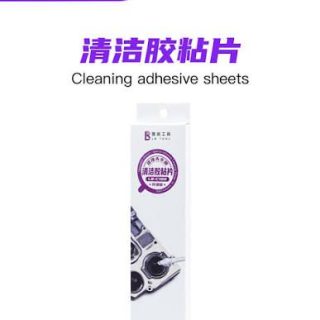 LB Cleaning adhesive sheets LB-C100
₨ 600.00
-
 LB Ultrasonic Cleaner Enhanced Version LB-U8 Pro
₨ 5,500.00


