I reckon most locals know the feeling of watching a late set play out, hoping a single edge turns into something useful. That same sense of timing sits behind multiplier team challenge bonus cash aud, which is built around coordinated play rather than solo spins. I have spent years around Newcastle Jets strategy and projects, and I see the same planning mindset here: read the conditions, pick your moments, and execute without forcing it.
You will want to sort the basics before you commit any cash. Signup asks for standard details, then verification follows before any first deposit clears. Once your account is active, the bonus activates on eligible tables and the first session is usually the cleanest way to see how the challenge rounds behave. If you are comparing where to start, you can check the layout at big-bass-floats-my-boat.com for how the entry steps are laid out.
How the challenge rounds actually work
The whole point here is different from the usual one-account, one-spin setup. You join a short team window, contribute your stake, and the group target shapes the multiplier that applies to any qualifying win. It is less about chasing a flashy number in isolation and more about reading the room, because the round only pays out when the challenge conditions line up. I have watched partnership deals come together the same way at Newcastle Jets, where the timing of a move matters more than the size of the headline figure.
When you are playing in an arvo after work, the practical bit is simple: you can usually tell within a few minutes whether the pace suits you. Say you are sitting at the kitchen table with a mate, both of you tracking the same challenge window on separate devices; you would see the target adjust as the round progresses, and you would decide whether to stay in or step back before the next sequence locks in. That everyday example matters because it shows the format is about choices, not guarantees.
Amelia Cooper, Product Analytics Lead, Kangaroo Point Analytics, puts it plainly: the design rewards players who treat each round as a small decision tree, not a lottery ticket. The catch is that you still need to manage your stake across the window, because the multiplier only applies to qualifying outcomes and the rest are ordinary results.
Bonus cash in AUD and what changes for local players
The cash side is where the format starts to feel different for an Australian player. Everything is priced and paid in AUD, which removes the usual currency shuffle when you are checking your balance after a session. The bonus cash sits on top of your normal play balance once the challenge window opens, and it is earmarked for the qualifying tables rather than spread across the whole account. That keeps the numbers readable, which is handy when you are trying to keep track of what is challenge money and what is your own stake.
I have seen commercial projects where the payment flow was the quiet make-or-break detail, and the same principle applies here. If the numbers are clear and the currency matches your bank account, you spend less time doing mental conversions and more time reading the round. For a player in regional New South Wales, that can mean checking the balance on a phone between errands and knowing exactly what the bonus pool is doing without second-guessing the exchange rate.
Callum Murray, Independent iGaming Expert, Daintree Digital Ventures, notes that AUD-denominated bonuses tend to reduce friction at the edges, especially for players who want to see their stake and any bonus cash in the same unit from the start. His caveat is that the bonus still carries the usual play requirements, so it is worth reading the terms before you treat it as free room to move.
| Item | What it means for your session |
|---|---|
| Currency | AUD throughout, so stake and bonus cash sit in the same unit |
| Bonus activation | Applies once the challenge window opens on eligible tables |
| Team window | Short coordinated rounds with a shared target |
| Payout logic | Multiplier applies to qualifying outcomes only |
What to check on signup, verification and the first session
The first session is where most people either settle in or walk away, so it pays to know the sequence before you click anything. Registration is straightforward, then verification asks for the usual identity details before any deposit is processed. Once that clears, the first deposit goes through in AUD and the bonus can be activated on the tables that participate in the challenge. You do not want to be halfway through a round and realise the bonus has not attached, because that is the moment the whole format stops making sense.
I have run projects where the onboarding steps were the difference between a clean launch and a messy one, and this is no different. If you treat signup, verification and first deposit as one flow rather than three separate chores, the first session is usually calmer. You can then focus on the challenge itself instead of fiddling with account settings while the round is live.
A practical example again: if you are playing after dinner and you have already verified your details earlier in the day, the first deposit and bonus activation should feel like a quick check rather than a hurdle. That is the ordinary Australian setup I mean – no drama, just a clear path into the first round so you can see how the team window behaves before you decide whether to keep going.
Where this fits and where it does not
This format is not trying to be everything to everyone, and that is probably the honest way to read it. If you want a quiet solo session with no team window and no shared target, this is not really built for that. If you prefer a short, coordinated challenge where the multiplier depends on how the round shapes up, it has a different priority set. I have seen enough commercial rollouts to know that a product with a clear lane usually works better than one pretending to cover every use case.
There is also a comparison worth making with how some venues preserve a bit of history while still running a modern operation. The Stardust’s iconic neon sign is preserved after the casino’s 2007 demolition, which is a decent reminder that a place can update its mechanics without erasing what people recognise. Multiplier team challenge bonus cash aud sits in that same practical space: the challenge layer is the new bit, but the underlying play is still about reading the table and managing your stake.
“Best odds guaranteed” pays the bigger of your taken or starting price, and that kind of clear settlement rule is the sort of thing I look for when I am judging whether a format is easy to understand. It does not make the play any safer, but it does make the outcome easier to read, which is useful when you are deciding whether to stay in a challenge window or step out.

Sale Items
-
 MECHANIC Lead-Free solder paste For SMT PCB BGA Repair 138℃ - V4B45
Original price was: ₨ 550.00.₨ 500.00Current price is: ₨ 500.00.
-
 Sugon freesty combinative workbanch
Original price was: ₨ 5,500.00.₨ 5,000.00Current price is: ₨ 5,000.00.
-
 YCS BGA high quality Solder Paste (138℃)
Original price was: ₨ 550.00.₨ 500.00Current price is: ₨ 500.00.
-
 Mechanic C919 3-in-1 QuickCooling Fan & Fume Exhaust & UV Lamp
Original price was: ₨ 3,200.00.₨ 3,000.00Current price is: ₨ 3,000.00.
-
 YCS TNZ Microscope Infrared Thermal Imaging Camera for Motherboard Rapid Detected
Original price was: ₨ 36,000.00.₨ 35,000.00Current price is: ₨ 35,000.00.
-
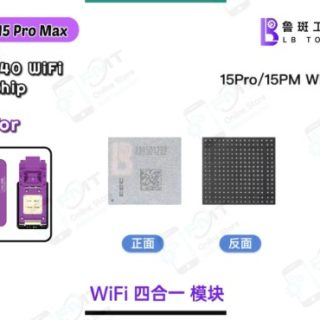 ₨ 3,200.00
-
 KAISI KS-107 PLIERS & CUTTER
Original price was: ₨ 300.00.₨ 250.00Current price is: ₨ 250.00.
-
 SUNSHINE TB-03S INFRARED RAPID THERMAL CAMERA TB-03S
₨ 37,000.00
-
 F7 Separator
₨ 4,800.00
-
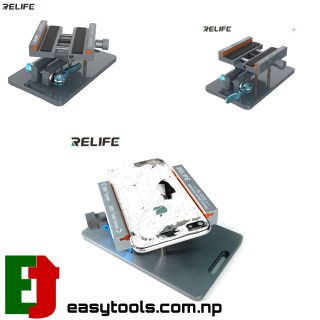 PCB Holders Relife for iphone 601S rotating
₨ 2,500.00
Products
-
 YCS DC25 Battery Booster IP& Andriod
₨ 2,300.00
-
 YCS D03 Bootcable
Original price was: ₨ 2,500.00.₨ 2,200.00Current price is: ₨ 2,200.00.
-
 LB Cleaning adhesive sheets LB-C100
₨ 600.00
-
 LB Ultrasonic Cleaner Enhanced Version LB-U8 Pro
₨ 5,500.00