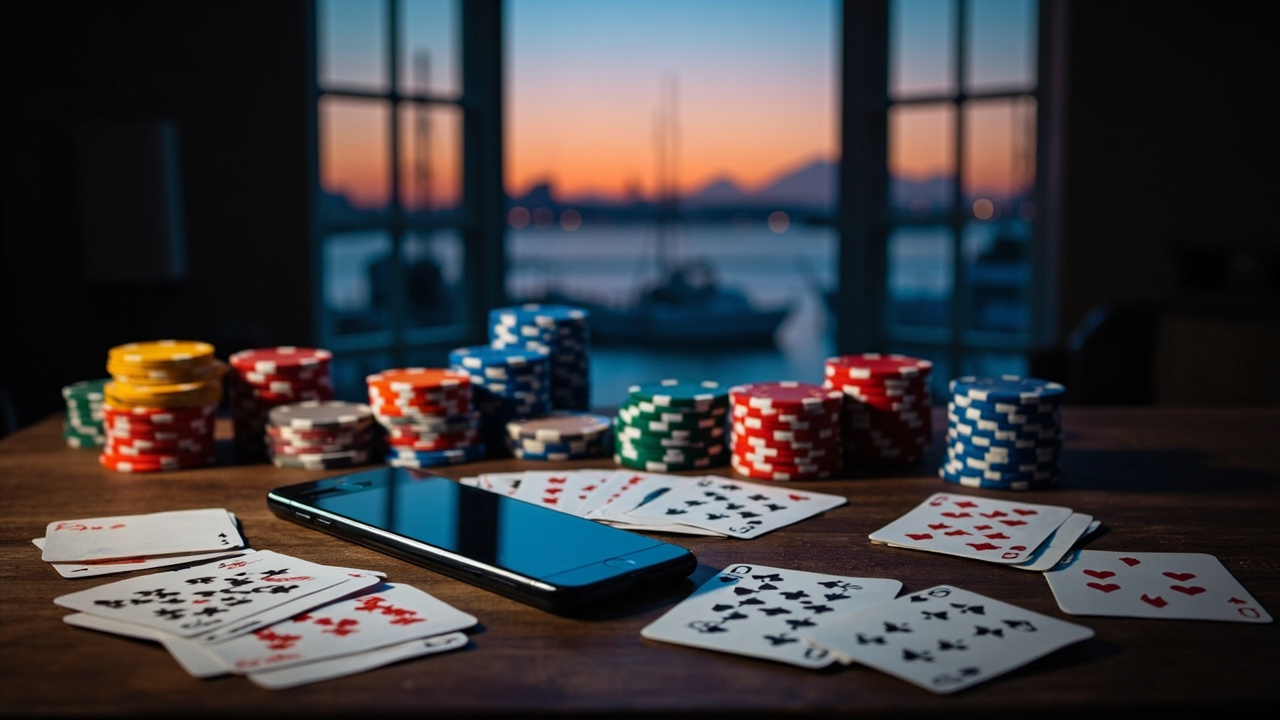
Walking past pokies venues in Hobart on a busy arvo, the question is never just which machine to pick. It is whether the operator’s self-exclusion setup actually respects a player’s limits. After twelve years in equity capital markets and building FinAi Group around AI automation, I judge these systems like any risk control layer: does it stop the bleed before the loss compounds? The self exclusion pokies venues australia act framework gives you the legal backstop, but the on-ground reality depends on how venues and platforms enforce it. This guide walks through the questions worth weighing before you commit to a venue or an online operator.
The first question is whether the venue’s self-exclusion process is actually usable, not just present. In Tasmania, the Tasmanian Gaming Commission oversees exclusion registers, and a venue near Salamanca or down the waterfront should make the opt-in steps visible without sending you hunting through staff. I have seen predictive dashboards flag a player’s risk pattern well before a loss spirals, yet the human interface still fails when the paperwork is buried. A proper setup lists the exclusion tiers, the cooling-off windows, and the re-entry conditions in plain English, with a single point of contact for changes. Read the self exclusion pokies venues australia act guidance alongside the venue’s own policy, because the legislation sets the floor and the operator’s process decides whether you can actually use it on a Tuesday night. If the steps feel vague or the staff cannot confirm how a temporary ban translates into machine access, treat that as a red flag rather than a minor inconvenience.
The second question is how the venue handles identification and enforcement once you are on the list. A credible operator cross-checks your exclusion status against the register before you sit down, not after you have already fed coins into a machine. In my capital markets work, we built models that caught drift early; here the equivalent is a venue that logs your face, your card, and your exclusion status in one flow, so a second visit triggers a hard stop rather than a polite conversation. Look for signs that the venue uses a shared register or a state database, and ask whether staff can explain what happens if you try to play under a different name. The self exclusion pokies venues australia act regime is only useful if the venue treats exclusion as a gate, not a suggestion. If the process relies on memory alone, or if the staff shrug when you ask how they stop a listed player, the venue is not doing the job the law expects.
The third question is whether the venue’s self-exclusion terms match your actual patterns, not a one-size-fits-all promise. Some players need a six-month break after a rough run; others need a longer reset that covers both land-based machines and any linked online account. A well-run venue will let you choose the duration, explain the re-entry rules, and keep the terms consistent across every touchpoint, including the loyalty programme and any bonus mechanics. I have watched AI-driven risk scoring flag a player who keeps returning within a narrow window, and the right response is a clear exclusion window that matches that behaviour rather than a vague warning. Check whether the venue’s policy covers temporary and permanent options, whether it lists what happens to pending credits, and whether the staff can point to the exact clause that governs your situation. If the terms shift depending on who you ask, or if the venue quietly keeps your loyalty points active while you are excluded, the setup is not aligned with the law or with your interests.
The fourth question is how the venue supports you after you have signed up, because exclusion is only the start of the decision. A responsible operator gives you a named contact, a clear process for extending or lifting a ban, and a way to check your status without waiting on a busy counter. In Hobart, that might mean a small office near the CBD or a dedicated phone line that actually answers on an arvo when you need it. I have seen automation handle routine checks cleanly, but the human follow-through still matters when a player wants to confirm that a temporary exclusion has ended or that a permanent one is still in place. Read the venue’s support details, test whether you can reach someone without jumping through hoops, and compare that against the broader self exclusion pokies venues australia act expectations for ongoing oversight. If support is slow, vague, or tied up with unrelated queries, the venue is treating exclusion as a paperwork exercise rather than a real safeguard.
- Decide which exclusion window matches your pattern, whether that is a short reset or a longer break.
- Confirm the venue uses a state or shared register and ask how staff check your status before you play. https://goldenbet-au5tralia.com
- Read the venue’s own policy alongside the self exclusion pokies venues australia act guidance so the terms line up.
- Ask what happens to loyalty points, pending credits, and any linked online account during the exclusion.
- Get a named contact for support and test that you can reach someone without a long delay. Gambling Self-Exclusion In Australia And Safer
- Keep a record of your exclusion confirmation and check your status if you return near the end of the window.
Jack Wilson, Affiliate Partnerships Director, Pacific Player Protection Institute, puts it bluntly: “A self-exclusion clause that staff cannot explain in two sentences is not doing the job the law expects.” That is the kind of caveat worth keeping in mind when you weigh a venue’s promises against its actual process.
If you have used a self-exclusion setup at a local pokies venue or online, I would like to hear how it held up when you needed it most. Drop a comment, send this to a mate who has been thinking about it, or tell us what you reckon worked and what did not.

Sale Items
-
 YCS Y007 VOICE AND TOUSH SEPARATOR
Original price was: ₨ 10,000.00.₨ 9,500.00Current price is: ₨ 9,500.00.
-
 SUNSHINE IP Series Maintenance and Replacement Battery Holder
Original price was: ₨ 450.00.₨ 400.00Current price is: ₨ 400.00.
-
 YCS 4K Square Camera Red High Pixel
Original price was: ₨ 13,000.00.₨ 12,500.00Current price is: ₨ 12,500.00.
-
 IPHONE X OCA glass mechanic high quality mechanic Brand
Original price was: ₨ 300.00.₨ 250.00Current price is: ₨ 250.00.
-
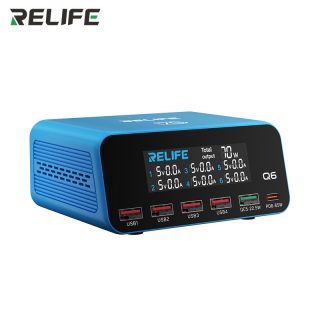 RELIFE Q6 Smart Multi-Port Charger
Original price was: ₨ 2,800.00.₨ 2,600.00Current price is: ₨ 2,600.00.
-
 YCS-II 2024 C210-I(Straight Tip)
₨ 1,000.00
-
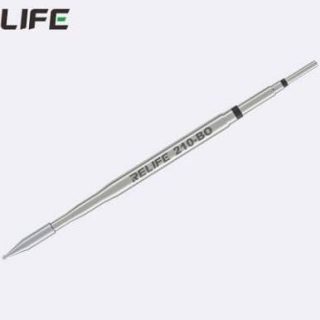 RELIFE 210-BO Tip Soldering lron / Ball Head
₨ 600.00
-
 Charging Connector Flex / PCB Board for Apple iPhone 8 Plus- High Copy
₨ 600.00
-
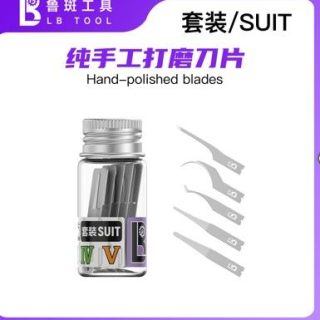 LB Hand polished blade SUIT(5pcs)
₨ 1,000.00
-
 Sunshine SS-916 Ultra Digital Display Charging Activation Board for iPhone 6 to 16Pro Max & Android
₨ 2,200.00
Products
-
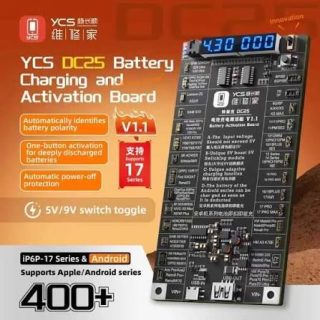 YCS DC25 Battery Booster IP& Andriod
₨ 2,300.00
-
 YCS D03 Bootcable
Original price was: ₨ 2,500.00.₨ 2,200.00Current price is: ₨ 2,200.00.
-
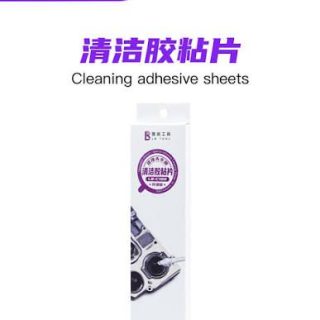 LB Cleaning adhesive sheets LB-C100
₨ 600.00
-
 LB Ultrasonic Cleaner Enhanced Version LB-U8 Pro
₨ 5,500.00