$1 minimum deposit casino australia
A very low minimum deposit can change what you actually test when you choose an online casino. Instead of asking “What games do they have?”, you start asking “How quickly can I find them, how clearly are the rules shown, and do the lobby tools make small-stake play feel intentional rather than scattered?” In $1 minimum deposit casino australia markets, these questions matter because the first deposit is often exploratory: you’re sampling providers, trying different volatility styles, and learning whether withdrawals and promotions don’t force extra friction. If you want a quick way to confirm what “$1” means in practice for this brand’s offering, you can review context here: https://theminimumdepositcasino.com/1-minimum-deposit-australia.
Where the lobby either helps or hides value
The best test of a $1-minimum proposition isn’t the deposit screen—it’s what you see immediately after logging in. An effective lobby architecture supports low-stake players by making discovery efficient: categories should be legible, filters should work as expected, and the casino should highlight “play now” choices that don’t feel buried behind generic marketing tiles. Watch for whether the site segments games by type (slots, live casino, roulette, blackjack) and by practical characteristics such as RTP branding, volatility labels, or “popular” tags that are actually clickable rather than decorative.
Small deposits typically mean shorter sessions. That makes search relevance and browsing speed more important than sheer catalog size. When you open the lobby, ask: can you reach the exact play style you want in under two minutes? For example, if you want a low-volatility slot to match a longer buy-in, you should be able to filter or identify it without endless scrolling. Likewise, if you prefer table games with clearer decision points, the live section should separate table variants (e.g., blackjack vs baccarat vs roulette) rather than dumping everything into one undifferentiated list.
Another signal is how the brand handles provider discovery. A well-structured lobby typically offers either a provider filter or a provider “rail” that you can use to find familiar studios without relying on random promos. For $1 deposit players, provider familiarity reduces cognitive load: you already know what to expect from a studio’s math feel, feature density, and game pacing. If discovery relies mostly on promotional tiles, you may end up spending your smallest budget on browsing instead of play.
Analytical thesis: a $1 minimum deposit casino succeeds when the game catalog feels navigable at micro-budgets
The core observation is simple: “$1 minimum deposit” is only useful if the rest of the interface treats that deposit level as a normal starting point. This brand’s value should show up in how clearly it presents its slot and table options, whether it communicates game mechanics before you commit, and how it supports repeated attempts to find the right match. If the lobby experience is optimized for curiosity rather than friction, micro-budgets become a legitimate way to test preferences—not a reason to feel stuck in generic categories.
To test that thesis, it helps to evaluate the catalog through a few concrete dimensions. First is information density—do the game cards show meaningful indicators (like RTP or volatility where available) or just visuals? Second is category fit—can you separate “quick play” and “feature-heavy” slots, and can you distinguish live table variants without confusion? Third is decision timing—does the interface show rules, bet limits (where relevant), and how gameplay works quickly enough that you’re not constantly switching between game pages and lobby search?
After checking these dimensions, you can make a qualified judgment: a low-minimum casino can be a strong fit for experimental play, but only when the catalog tools reduce the time between “I want a specific experience” and “I’m actually playing.” If discovery is clumsy or information is missing, the low minimum becomes less impressive because the real cost is attention and trial-and-error.
Slots: clarity matters more than “more games”
Slots are where $1-deposit players feel the interface most. A micro-budgets approach usually means you’ll test multiple games rather than committing to one title. That makes preview information and selection tools key. You want game tiles that help you anticipate the kind of session you’re entering: feature frequency, base game pace, and whether bonuses are likely to arrive in a way that fits your time horizon.
In practice, check whether the lobby supports sorting or filtering beyond generic “new” and “popular.” Even without an explicit “volatility” filter, a casino can support informed selection through consistent game-detail panels. When you click a slot, the game info should ideally show core bet controls, paylines or reel mechanics where relevant, and a transparent view of how stake levels map to your deposit constraints.
Low minimums also interact with real expectations about hit frequency. With smaller stakes, you may experience longer stretches without dramatic outcomes. That’s not a defect; it’s how slot variance behaves. The interface becomes your ally or your problem: if the casino’s presentation encourages you to jump into games without understanding betting structure, you might interpret normal variance as a reason to churn—restarting searches rather than refining your choice criteria.
So the question isn’t simply “Do they have slots?” It’s whether the slots section supports small, repeated decisions: finding a theme you like, choosing a volatility profile you can tolerate, and adjusting stakes within what you planned to deposit. A brand that makes those choices straightforward is more aligned with $1 minimum deposit play than one with impressive catalog breadth but weak discovery logic.
Live casino and table games: game selection should reduce rule uncertainty
For live play, catalog discovery is less about themes and more about rules and betting choices. If the brand’s live lobby is well organized, you can quickly find the exact table you’re comfortable with—roulette variants, blackjack rule sets, and any other live tables presented. Live games also demand trust in clarity: if the bet interface or table description doesn’t explain what’s on offer, a low deposit can lead to frustration because you may need to re-learn rules mid-session.
Look for whether live games are grouped sensibly and whether the “bet size” expectations make sense for micro budgets. Even if a $1 minimum deposit is permitted, your practical ability to play depends on in-game minimums and how the table increments behave. Many casinos allow small deposits but require higher live bet minimums. That mismatch is exactly what a navigable lobby should reveal early—through clear bet controls or by communicating table constraints before you start.
When evaluating the table experience, pay attention to whether the interface supports informed selection. For example, a live blackjack entry should clearly reflect the version (decks, side bet availability if any, and any rule variations shown in the game info). If the casino buries this detail behind a generic “live blackjack” label, your $1-deposit exploratory intent can break down. You may spend your budget on loading and then backing out because the rules don’t match what you expected.
A brand that treats live selection as a guided decision—organized lobbies, clear game naming, and early presentation of bet structure—turns micro-deposit play into genuine learning rather than constant trial-and-error.
Provider discovery, search, and filters: the practical mechanics of “finding the right game”
The most operational part of a $1 minimum deposit proposition is how you locate games quickly and repeatedly. This is where provider discovery, search relevance, and filter reliability become measurable. Ideally, the casino offers a search function that supports partial names and common themes (for example, you should be able to type a partial provider name or a well-known game title fragment and reach the correct result). Filters should be consistent across categories; if you set “slots” and then attempt a provider filter, the resulting list should stay meaningful rather than resetting.
For micro-budget players, a key advantage is being able to run short comparisons. You might deposit $1, test one slot from Provider A, then test another from Provider B. If the lobby lets you switch providers with minimal friction—through a provider rail, an easy filter, or a direct category path—you can actually learn what you like. If discovery requires multiple refreshes, long scrolling, or inconsistent sorting, the advantage of a low minimum fades.
Also evaluate whether the site distinguishes discovery paths between desktop and mobile (even if the same catalog exists). If the mobile lobby collapses filters or hides provider tools behind extra taps, your ability to find suitable micro-budget games can deteriorate. That’s not about “having games”; it’s about whether the navigation supports repeated micro sessions without turning each session into a puzzle.
Finally, check whether the brand’s categorization supports different learning needs. Beginners often want “recommended” or “popular for new players.” But serious $1-deposit players still need structured selection: a way to find games that match volatility or feature preferences, not just what’s trending.
Strengths, conditions, and trade-offs for $1 minimum deposit game discovery
A $1 minimum deposit casino australia proposition can be effective, but only under the right conditions. The strongest scenario is when the casino pairs a low deposit requirement with a lobby that supports precise game choice. In that case, the deposit becomes a tool for exploration: you can test multiple providers, try different slot styles, and sample live tables at small stake levels without feeling trapped in vague categories.
One major trade-off often appears in the boundary between “deposit minimum” and “play minimum.” A low deposit can still coexist with higher in-game betting floors, especially for live tables. If that happens, the catalog can still be large, but the micro-budget benefit shrinks: you may be forced into fewer playable options. That’s why the best evaluation focuses on how the game cards and bet controls behave for low stakes—whether the casino surfaces practical constraints early enough to make the selection decision before you commit.
Another condition is the quality of game information. Slots and tables don’t need to show everything, but they should offer enough clarity that you can choose deliberately. When game pages present bet settings, variant explanations, and consistent navigation back to the lobby, $1 deposits feel less like a gimmick and more like a safe way to explore preferences.
The trade-off to watch is offer-driven discovery. If promotions dominate the lobby layout, users with micro budgets may have less influence over what they play next. In that environment, you might bounce between marketing tiles and “recommended” carousels instead of using search and filters to follow your own selection logic.
What to verify before you trust micro-budget play
Even with a $1 minimum deposit promise, you should verify the details that determine whether the catalog experience actually supports your intent. Start with practical discovery tests: search for a known game, then search for a provider; compare how quickly results appear and whether the right titles surface. Next, open two slots with distinct styles (one feature-heavy-looking, one simpler) and check whether bet controls are usable at very low stakes.
Then test live access decisions. Choose one live table category and open the game info panel—confirm the table variant and check betting controls for the lowest stake range you can select. If your lowest selectable bet is meaningfully higher than what you expected from a $1 deposit, you’ll need to adjust your session plan (or reconsider whether micro-budget play is realistic).
Finally, evaluate how the casino handles repeat discovery. After you exit a game, can you return to your last lobby filters, or do you land back at generic categories? Repeat usability matters for $1-deposit players because each session depends on fast re-entry and consistent navigation. If your filters reset, you’ll spend time re-finding the right options, which effectively increases the “cost” of low minimums.
- Confirm lobby filters and search deliver consistent results across slots and live categories during low-stake browsing.
- Check game info panels show enough about rules or mechanics before you start, not only after loading.
- Verify in-game lowest bet controls align with a micro-budget session plan, especially for live tables.
- Test whether provider discovery tools are accessible on both desktop and mobile, with minimal extra taps.
- Evaluate how quickly you can return from a game to the same category or filter state for repeat sampling.
- Assess whether promotions dominate the lobby rails so much that personal browsing becomes difficult.
- Check bet setting controls remain stable and responsive on small stake ranges to avoid accidental over-betting.
For $1 minimum deposit casino australia players, the decisive factor is not just entry cost—it’s whether the brand’s catalog architecture helps you make good game-selection decisions quickly. When discovery tools work and game pages clearly support low-stake settings, micro budgets become a meaningful way to explore. When practical bet limits, inconsistent filters, or vague game information undermine that process, the low minimum doesn’t translate into a smooth experience. Use targeted verification tests and judge the interface as much as the catalog.

Sale Items
-
 Petrol/ Alcohol bottle for liquids
Original price was: ₨ 600.00.₨ 500.00Current price is: ₨ 500.00.
-
 YCS Mr.Yang No.1 Base Model 1400W Curve Digital Display Hot Air Gun Desoldering Rework Station(Nepal)
Original price was: ₨ 17,000.00.₨ 16,800.00Current price is: ₨ 16,800.00.
-
 2UUL Screen Sealing Adhesive for iP12-17 Series (5pcs/Pack)( per packet
Original price was: ₨ 600.00.₨ 500.00Current price is: ₨ 500.00.
-
 RELIFE RL-20B 2015 Soldering Wick desolder wire
Original price was: ₨ 1,000.00.₨ 900.00Current price is: ₨ 900.00.
-
 KAISI KS-107 PLIERS & CUTTER
Original price was: ₨ 300.00.₨ 250.00Current price is: ₨ 250.00.
-
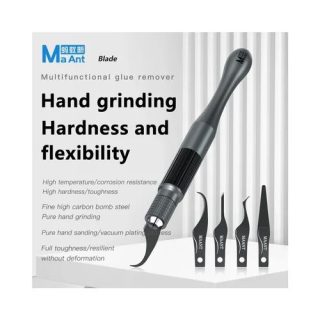 MAANT Blade pry knife set MY-102
₨ 1,500.00
-
 SUGON-TJ251 Sugon TJ251 Hot Air Gun Handle Bracket
Original price was: ₨ 4,200.00.₨ 3,300.00Current price is: ₨ 3,300.00.
-
 SOPTOP 6565 Pro Trinocular Stereo Microscope for soldering Continuous Zoom 6.5X-65X For Mobile Phones PCB BGA Motherboard Repair
₨ 44,000.00
-
 iPhone16 chip test rack
₨ 10,500.00
-
 OV-4 AMAOE STENCIL INCLUDED(77920-21 56020 7210M-11 PM1632 SDR660 PM670A PM6125 BGA254 PM670 PM7150 PM6150L SM6125 665/675AIE/730G/710/SM6125/SM6150/SM7150 SDM710 CPU / OPPO-A11/A11X/A52/K3/K5/RENO RENO2/R17 Pro/ VIVO-NEX/S1 PRO/U3X/U10 X27/X27Pro/Y50/Y9S/Z5X T=0.12MM)
₨ 400.00