Best real hook up sites behavior: how to spot genuine hookup intent without guessing
You match, you chat, and suddenly you’re stuck between “they want something casual” and “they’re just being friendly.” If you’re using hookup-focused dating spaces, that ambiguity can feel louder—especially when messages stay flirty but never move toward a real plan. This article looks at how genuine hookup intent tends to show up in communication patterns, and why common assumptions (like “fast replies = interest”) often mislead. Along the way, you’ll see how to test intent without turning the vibe into an interrogation.
When people talk about best real hook up sites, they’re usually trying to reduce uncertainty. But the real skill isn’t picking the “right” place—it’s learning what signals are actually about availability and next steps, not just chemistry.
Hookup intent has a “logistics layer,” not just flirtation
One of the biggest misconceptions is that hookup intent is primarily a mood: teasing words, sexual emojis, or compliments that feel like a green light. Those can be real, but they can also be “low-commitment attention.” Genuine intent often includes a logistics layer—small, specific choices that imply readiness to meet.
Look for patterns like: proposing a concrete time window (“tonight after 9”); asking about location in a practical way (“what part of town are you in?”); suggesting a low-friction plan (“quick drink nearby first, then see where it goes”); or checking availability without drama. Even a simple “Are you free this weekend?” can be more revealing than explicit talk, because it shows they’re considering timing and distance.
Try not to over-read speed alone. Someone might reply quickly while still being unsure, and someone might be slower while still genuinely ready. Instead, track whether their messages increasingly answer the “when/where/how” questions your brain naturally has.
Common misreads: the “performance” messages that don’t lead anywhere
In hookup culture, some conversations become a loop of escalating energy with no bridge to action. It feels flattering, but it can also be a form of entertainment—attention without follow-through. Watch for these misreads:
First, the “compliment-only” trap. If their messages stay focused on your body or vibe but avoid any practical next step, they may be enjoying the exchange rather than moving toward a meeting. Second, the “vague tomorrow” habit. If they keep saying they’ll “let you know” or “maybe later” without narrowing anything down, that’s often a soft exit. Third, the “text chemistry” bubble. Some people prefer the chat itself and feel no urgency to meet; their tone can be warm and still not translate into real-world availability.
None of this means you should assume bad faith. It just means you’ll get better results by treating flirtation as necessary but not sufficient. The goal is to see whether they can co-create a plan that fits both of you.
How to test intent politely: ask for a plan, not a promise
Instead of asking, “Do you actually want to hook up?”—which can feel confrontational—ask for a workable next step. A good test is specific, casual, and easy to answer. For example: “I’m free Thursday or Saturday—what’s better for you?” or “Want to meet for a quick drink and play it by ear?” You’re not forcing commitment; you’re making it possible for them to show what they mean.
If they’re genuinely interested, you’ll usually see quick alignment: they’ll pick a time, suggest a nearby area, or ask a follow-up that moves things forward. If they dodge, stall, or keep the conversation abstract, you’ve learned something important without burning the connection.
For many people, hookup intent is dynamic—sometimes they’re in the mood but not ready to meet. Your job isn’t to “win” them over; it’s to find out whether their interest includes action. When it does, the vibe feels effortless. When it doesn’t, you can redirect your energy to conversations that go somewhere.

Sale Items
-
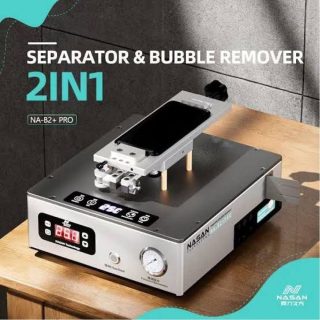 Nasan NA-B2+ Pro 2-in-1 8-inch Multi-function Bubble Remover Separator Machine Built-In Air Compressor
Original price was: ₨ 27,500.00.₨ 26,600.00Current price is: ₨ 26,600.00.
-
 SUNSHINE S-918F Pro Multifunctional Electronic Brake Screen Separator
Original price was: ₨ 16,500.00.₨ 16,000.00Current price is: ₨ 16,000.00.
-
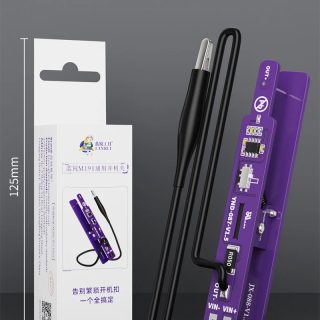 Lanrui M191 Universal Boot Clip Turn On Phones Without Battery
Original price was: ₨ 1,250.00.₨ 1,200.00Current price is: ₨ 1,200.00.
-
 SUNSHINE SS-5103F Multi Function Precision Screwdriver Set
Original price was: ₨ 650.00.₨ 600.00Current price is: ₨ 600.00.
-
 oca glass mechanic high quality for IPHONE 14/14PRO/14PRO MAX
Original price was: ₨ 400.00.₨ 350.00Current price is: ₨ 350.00.
-
 YCS universal maintenance Potential fixture
Original price was: ₨ 2,200.00.₨ 2,100.00Current price is: ₨ 2,100.00.
-
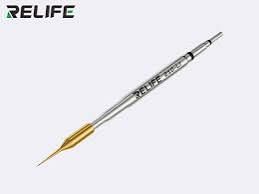 RELIFE 210-LI Ultra sharp soldering tip
₨ 600.00
-
 SS-918L screen separator
₨ 4,200.00
-
 T-245 soldering iron's tip/bit
₨ 1,000.00
-
 Relife RL-724A Screwdriver Set
Original price was: ₨ 3,600.00.₨ 3,500.00Current price is: ₨ 3,500.00.
Products
-
 YCS DC25 Battery Booster IP& Andriod
₨ 2,300.00
-
 YCS D03 Bootcable
Original price was: ₨ 2,500.00.₨ 2,200.00Current price is: ₨ 2,200.00.
-
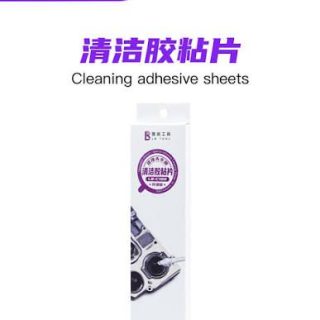 LB Cleaning adhesive sheets LB-C100
₨ 600.00
-
 LB Ultrasonic Cleaner Enhanced Version LB-U8 Pro
₨ 5,500.00