Many people assume holding a plank for minutes builds iron-clad stability, yet time under tension alone rarely delivers functional strength. Real core stability depends on resisting unwanted motion during loaded movement, not just surviving an isometric hold. When building core stability with bodyweight planks and functional gym exercises, the method matters more than the minutes logged. A skeptical look reveals that most programs confuse endurance with genuine anti-movement control, leaving lifters with sore abs but weak trunk positioning under load.
To bridge the gap between static endurance and dynamic resilience, athletes must integrate anti-rotation and anti-extension drills that mimic real-world demands. Facilities like the factory d1 training indianapolis specialize in programming these transitional movements to fortify the torso against unpredictable loads. Prioritizing control during compound exercises ultimately yields a midsection that performs reliably under pressure rather than simply holding a position.
How Plank Variations Actually Train Core Stability
The standard plank is often treated as a one-size-fits-all test, but its value changes dramatically with leverage and intent. A high plank with neutral hips teaches anterior chain bracing, while a forearm plank shifts more demand onto the deep stabilizers and shoulder girdle. Side planks introduce lateral resistance, forcing the quadratus lumborum and obliques to fight frontal-plane collapse rather than simply hold a static line. The nuance most people miss is that a plank only trains stability when the torso stays rigid against gravity; if the hips sag or the lower back arches, the exercise becomes a low-tension endurance drill that teaches poor alignment. Progression should come from changing the base of support or adding subtle limb movement, not from chasing longer hold times. In practice, a thirty-second plank with perfect ribcage-pelvis alignment often builds more useful stiffness than a two-minute sloppy hold. That distinction matters because core stability is really about limiting excess motion, not about surviving discomfort.
| Parameter | Typical Approach |
|---|---|
| Primary goal | Resist unwanted spinal motion |
| Best plank entry point | Forearm or high plank with neutral hips |
| Common mistake | Sagging hips, flared ribs, longer holds with poor form |
| Meaningful progression | Narrow base, limb reaches, light external load |
| Useful hold range | Often 15-45 seconds of high-quality bracing |
For those comparing programming styles, the factory d1 training indianapolis often frames plank work as a positioning drill first and an endurance test second, which aligns with how the movement actually transfers. The key is treating each variation as a specific anti-movement pattern rather than a generic abs exercise.
Functional Gym Exercises That Carry Over to Real Stability
Anti-movement patterns and why they matter
Functional gym exercises build on the bracing learned in planks by adding load, leverage, or movement while demanding trunk control. Anti-extension work such as ab wheel rollouts or bodyweight inchworms forces the anterior core to resist the spine folding into extension under limb leverage. Anti-rotation drills using a cable or a single-arm carry teach the trunk to stay square when the limbs pull in asymmetrical directions. These patterns matter because daily lifting and most sports rarely ask the core to stay perfectly still; they ask it to stay organized while something else is moving. The overlooked caveat is that adding weight too early turns a stability drill into a strength test, and the trunk often compensates with hip hiking or rib flare instead of true stiffness. Start with bodyweight or light loads, cue a long exhale and ribs-down position, and only increase difficulty when the spine stays quiet throughout the rep.
When loaded carries and unilateral work fit
Loaded carries and unilateral presses fit into core stability work when the goal is maintaining alignment under asymmetry rather than maximizing load. A suitcase carry, for example, forces the lateral stabilizers to resist side bending every step, while a single-arm dumbbell press demands rotational control through the ribcage and pelvis. These movements are useful precisely because they expose small leaks in posture that a static plank can hide. The practical rule is to keep the load modest enough that form stays clean for the full set; if the torso wobbles or the grip fails before the trunk does, the exercise is no longer training stability. In building core stability with bodyweight planks and functional gym exercises, the carry and unilateral categories act as a bridge between static bracing and real-world loading, but only when the focus stays on trunk position rather than on moving the heaviest possible weight.
Matching the Method to What You Actually Need
The right mix depends on what kind of stability is missing. If a lifter collapses into extension under a barbell or flares the ribs during overhead work, anti-extension planks and rollouts usually help more than endless side planks. If the trunk twists or shifts during single-arm work, anti-rotation carries and unilateral presses address that leak directly. Bodyweight planks work best as a teaching tool for positioning and brief, high-quality bracing, while functional gym exercises add the leverage and asymmetry that make the skill transferable. A sensible session might spend a few minutes on a crisp plank variation, then move into one or two loaded patterns that challenge the same anti-movement quality under slightly harder conditions. The common shortcut is stacking every plank and carry into one workout and calling it core stability, but the result is usually fatigue without a clear training signal.
Real core stability comes from choosing the right anti-movement pattern, keeping the spine organized, and progressing by leverage and load rather than by arbitrary hold times. Bodyweight planks teach the brace, and functional gym exercises test whether that brace holds up when the body has to do something else at the same time. Treat the plank as a positioning check, use carries and unilateral work to expose weak links, and let form – not duration – decide when a variation is ready to advance.

Sale Items
-
 SUGON-TJ251 Sugon TJ251 Hot Air Gun Handle Bracket
Original price was: ₨ 4,200.00.₨ 3,300.00Current price is: ₨ 3,300.00.
-
 YCS Repairman 3 Seconds Quick Dry oil (transparent)
Original price was: ₨ 400.00.₨ 350.00Current price is: ₨ 350.00.
-
 MQ-2 AMAOE STENCIL INCLUDED IC (MSM8909W RAM, MT6761V, MT6779V, MT6758V, MSM8909W CPU, SDM439, MT6765V, MT6768V)0.12MM
Original price was: ₨ 450.00.₨ 400.00Current price is: ₨ 400.00.
-
 Combo 2UUL & mijing PCB holder OX JING for mobile pcb board
Original price was: ₨ 2,200.00.₨ 1,800.00Current price is: ₨ 1,800.00.
-
 itech mechanic screwdriver set for gadgets reapir mobile, laptop, watch , drone, and more
Original price was: ₨ 1,400.00.₨ 1,300.00Current price is: ₨ 1,300.00.
-
 MI-16 AMAOE STENCIL INCLUDED ( 77048E, 58080-11, VC7643, BGA153, MT6190MV, W607S13, W60A202,MT6363AW, M-6MH05, MT6368DW, MT6375P, MT6319AP, MT6895Z, RAM, MT6983Z, 78207, MT6637XP, MTK6338W, 53730-11, SC8551A)0.12MM
₨ 400.00
-
 KAISI K-1208 UNIVERSAL MAGNETIC PCB HOLDER WITH 6 PINS
Original price was: ₨ 1,300.00.₨ 1,200.00Current price is: ₨ 1,200.00.
-
 IRepair MS1 iPhone17 modular
₨ 1,500.00
-
 Mijing Battery External Flex Cable for iPhone 12 to 14Pro Max Battery Maintenance
₨ 2,000.00
-
 Mijing mainboard layered taster 11 series C18
₨ 17,500.00
Products
-
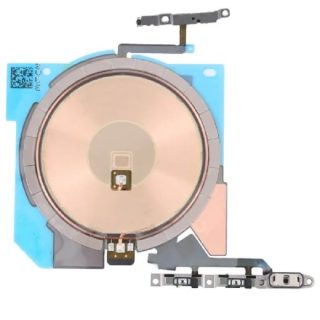 IP 14PM NFC Flex
₨ 1,500.00
-
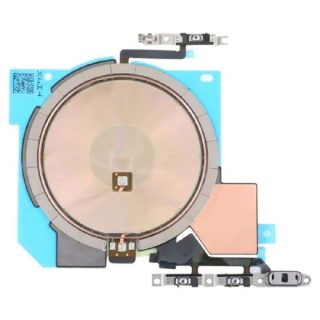 IP 14 PRO NFC Flex
₨ 1,500.00
-
 IP 13 PM NFC Flex
₨ 1,400.00
-
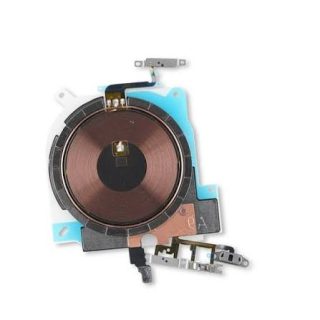 IP 13 PRO NFC Flex
₨ 1,400.00