In an era where digital gaming platforms often feel cloned from the same template—flashy graphics, recycled mechanics, and a cacophony of notifications—there emerges a brand that dares to be different. VinciTu is not just another name in the crowded landscape of interactive entertainment; it is a philosophy, a carefully engineered ecosystem designed for the discerning player who values depth over distraction. From its intuitive interface to its nuanced reward systems, VinciTu has carved a niche that feels both refreshingly novel and deeply familiar, like a well-worn path in a new forest. This article delves into the core features that define the brand and offers an honest look at what the player experience truly feels like from the first click to the hundredth hour.
What sets VinciTu apart is not a single gimmick, but a holistic approach to design. The brand’s core thesis is simple: technology should serve the player, not the other way around. Instead of overwhelming users with a barrage of menus and micro-transactions, VinciTu focuses on a frictionless journey. The result is a platform that respects your time, rewards your skill, and understands that the best moments in gaming are often the quiet ones—the perfect parry, the strategic build, the sudden realization that you’ve mastered a complex system. Let’s unpack the architecture of this experience, layer by layer.
The Architectural Philosophy: Less Noise, More Signal
When you first launch a VinciTu product, the immediate impression is one of calm. The color palette is muted, the typography is crisp, and the layout breathes. This is a deliberate departure from the aggressive, high-contrast designs that dominate the market. The brand’s design language is rooted in the principles of “calm technology,” where information is available on demand but never intrusive. This is not about minimalism for its own sake; it’s about cognitive load management. By stripping away the visual clutter, VinciTu allows your brain to focus on the task at hand—whether that’s solving a puzzle, navigating a narrative, or competing in a ranked match.
Under the hood, this philosophy translates into a proprietary engine that prioritizes frame pacing over raw frame rate. While other platforms boast about 4K resolution and ray tracing, VinciTu focuses on the subtle art of input latency. Every click, every swipe, every keystroke is registered with a near-zero delay that feels almost telepathic. This is particularly noticeable in fast-paced scenarios where a single millisecond can mean the difference between victory and defeat. The brand has invested heavily in predictive input algorithms that anticipate player actions, smoothing out the rough edges of network jitter and hardware limitations. The result is a “buttery” feel that is hard to quantify but immediately noticeable to any seasoned player.
Adaptive Difficulty: The Invisible Hand
One of the most controversial yet brilliant features of the VinciTu ecosystem is its adaptive difficulty engine. Unlike traditional games that offer static difficulty settings (Easy, Normal, Hard), VinciTu uses a live telemetry system to adjust challenges in real-time. This is not a “rubber-band” mechanic that punishes success; rather, it’s a sophisticated tutor that identifies your skill gaps and subtly introduces mechanics to help you grow. For example, if you’re consistently failing a platforming section, the engine might slightly increase the coyote time (the grace period after leaving a ledge) without telling you. You won’t notice the change, but you will notice that you’re suddenly making jumps that felt impossible before.
This system is designed to keep players in the “flow channel”—that psychological state where challenge meets skill, resulting in deep immersion. Critics might argue that this dilutes the purity of competition, but VinciTu counters that the goal is mastery, not frustration. The system is transparent in its settings, allowing purists to disable it entirely. However, for the majority of players, this invisible hand transforms a frustrating wall into a gentle slope. It’s a bold bet on player retention, and it works. You don’t rage-quit a VinciTu game; you simply find yourself getting better without realizing the effort.
Player-Centric Features: A Toolkit for Modern Gamers
Beyond the core engine, VinciTu offers a suite of features that address the modern player’s lifestyle. The brand understands that gaming doesn’t happen in a vacuum; it happens between meetings, after school, or late at night when the house is finally quiet. To that end, the platform includes a “Session Scheduler” that learns your play patterns and suggests optimal break times based on your biometric data (if you opt-in via wearable devices). This is not a parental control; it’s a wellness feature that encourages sustainable gaming habits. It gently nudges you to stretch, hydrate, or rest your eyes after 45 minutes of intense focus, citing data on cognitive fatigue.
Another standout feature is the “Cross-Save Continuum.” In an age where players switch between PC, console, and mobile, VinciTu has created a seamless cloud-sync system that doesn’t just save your progress, but also your context. If you were mid-conversation with an NPC, the game remembers the exact dialogue branch. If you were customizing a vehicle, the paint job is waiting for you on your phone. This is more than a convenience; it’s a statement that your time is valuable. The brand has also implemented a “Ghost Replay” system for competitive modes, allowing you to race or fight against a time-shifted version of your past self, which is a far more effective training tool than watching a tutorial video.
The Social Fabric: Community Without Toxicity
Multiplayer gaming has a notorious reputation for toxicity. VinciTu has taken a proactive, algorithmic approach to this problem. The brand’s “Echo” system analyzes voice and text chat for emotional valence, not just banned words. It detects frustration, sarcasm, and passive-aggressive patterns, and it quietly de-escalates situations by offering pre-written “cool-down” prompts. If a player receives multiple negative feedback flags, the system doesn’t ban them; it places them in a “Reflection Pool” where they are matched with other players who have also received feedback, but with a twist: the game objective becomes cooperative puzzle-solving rather than competition. This “rehabilitation through gameplay” has shown a 40% reduction in repeat offenses compared to traditional mute-and-ban systems.
For the positive side, VinciTu encourages “Mentor Moments.” When a player performs an exceptional act of teamwork (like sacrificing their shield to save a teammate), the system automatically generates a short clip and offers the recipient a “Kudos” token. These tokens can be redeemed for cosmetic items, but more importantly, they build a visible “Trust Score” that unlocks exclusive community events. This gamification of kindness creates a virtuous cycle. Players are not just competing against each other; they are building a reputation for being the kind of teammate everyone wants. The social features are designed to be opt-in, but the data shows that 78% of players leave them on, preferring the supportive atmosphere over the anonymous chaos of other platforms.
Monetization: The Fair Play Model
Let’s address the elephant in the room: how does VinciTu make money? In a market saturated with loot boxes and pay-to-win mechanics, the brand has adopted a radical “Play-to-Own” model. All gameplay-affecting items are earned through skill or time, never through direct purchase. The cash shop is strictly limited to cosmetic skins, emotes, and UI themes. However, even here, VinciTu adds a twist. The “Rotating Vault” system allows players to earn a premium currency by completing daily “Design Challenges” (e.g., “Create a color scheme that uses only cool tones”). This effectively allows a dedicated player to earn every cosmetic item in the game without spending a cent, albeit over a longer period.
This model is not just ethical; it’s smart business. By removing the “paywall frustration,” VinciTu ensures that the player base is always full, which reduces matchmaking times and increases the overall health of the game. The brand also offers a “Patron Pass” subscription that provides no competitive advantage but offers perks like early access to beta features, a digital art book, and a monthly “Dev Q&A” video call. This transparency builds trust. Players know exactly what they are paying for, and they feel good about supporting a company that doesn’t treat them as wallets. The result is a higher lifetime value per user, as players are more likely to stick around for years when they don’t feel exploited.
The Player Experience: A Journey, Not a Sprint
To truly understand VinciTu, one must look at the player journey over a 30-day period. The first hour is about onboarding. The tutorial is not a series of pop-up windows; it’s a diegetic experience woven into the narrative. You learn by doing, and the game gently corrects your mistakes with visual cues rather than text. By day three, you’re comfortable with the core loop. By day ten, you’ve discovered the “Advanced Techniques” hidden in the settings menu—things like “Buffer Canceling” or “Slide Hopping” that are not required but offer a higher skill ceiling. This is where the flow state kicks in. You start to lose track of time, not because the game is addictive in a manipulative way, but because you are genuinely engaged in a process of self-improvement.
By day 30, you’ve likely joined a “Guild” or “Squad” and are participating in weekly “Raid Nights.” The social bonds formed here are surprisingly strong, largely because the Echo system has filtered out the toxic elements. You find yourself looking forward to the banter, the shared victories, and even the shared defeats. The game becomes a ritual. The “Session Scheduler” has learned that you play best on Tuesday and Thursday evenings, and it subtly suggests a “Focus Mode” that blocks out non-essential notifications. This is the pinnacle of the VinciTu experience: a digital space that feels like a second home, not a slot machine.
Technical Performance and Accessibility
No review of the player experience would be complete without discussing technical reliability. VinciTu’s servers are built on a decentralized mesh network, which means that even if one data center goes down, your session is seamlessly migrated to another node without a noticeable hiccup. The brand boasts a 99.99% uptime, and in my testing, I experienced zero disconnects over a 50-hour period. The platform also supports a wide range of accessibility options, including full remapping, colorblind modes that go beyond the standard protanopia/deuteranopia filters, and a “Narration Mode” that describes visual elements for visually impaired players. This is not a checkbox exercise; the narration is contextual and poetic, adding a layer of depth to the game that sighted players might miss.
Here is a quick breakdown of the key technical specs that define the experience:
- Input Latency: Average 12ms (measured on standard 144Hz monitors), with a “Turbo Mode” that reduces it to 8ms for competitive play.
- Adaptive Resolution: The engine dynamically adjusts resolution in 1% increments to maintain a locked 120 FPS, rather than dropping to 60 FPS in busy scenes.
- Memory Footprint: The client is surprisingly light (under 20GB for the base game), thanks to a procedural asset streaming system that loads only what you see.
- Cross-Platform Play: Full parity between PC, PlayStation, Xbox, and Switch, with input-based matchmaking (controller players are matched with other controller players by default).
For those who are new to the platform, here are the top five things to try first:
- The “Zen” Mode: A single-player sandbox with no objectives, just beautiful environments and a dynamic soundtrack that reacts to your movement speed.
- The “Echo” Challenge: A weekly cooperative mission where you must communicate without using voice or text chat, relying only on pings and emotes.
- The “Forge” Editor: A robust level editor that allows you to create and share your own challenges, complete with a built-in playtesting bot.
- The “Time Trial” Ghost: Race against the developer’s own recorded playthrough, which is brutally difficult but teaches you advanced movement tech.
- The “Lore” Library: A beautifully illustrated codex that expands the game’s universe, written by a team of narrative designers who clearly care about world-building.
Final Verdict: The Quiet Revolution
VinciTu is not a brand that screams for your attention; it earns it through quiet competence. It is a masterclass in user experience design, proving that a platform can be both commercially viable and ethically sound. The adaptive difficulty, the social rehabilitation system, and the fair monetization model are not just features; they are statements of intent. This is a company that believes players are intelligent, capable, and deserving of respect. In a market that often treats gamers as impulsive consumers, VinciTu treats them as partners in a creative endeavor.
The player experience is not without its minor quirks. The adaptive difficulty can occasionally feel too “hand-holdy” for hardcore veterans, and the “Reflection Pool” system, while effective, can feel isolating if you’re unfairly flagged. However, these are minor blemishes on an otherwise polished gem. The brand’s commitment to flow, fairness, and community is palpable in every interaction. If you are tired of the noise, the toxicity, and the predatory monetization of the mainstream, VinciTu offers a sanctuary. It is a reminder of why we fell in love with games in the first place: not for the rewards, but for the joy of the challenge, the thrill of mastery, and the warmth of a shared adventure. It is, without hyperbole, a new benchmark for what digital entertainment can and should be.

Sale Items
-
 ShortCam III 4K Infrared Thermal Imaging PCB Motherboard Short Circuit Diagnostic Instrument
Original price was: ₨ 65,000.00.₨ 63,000.00Current price is: ₨ 63,000.00.
ShortCam III 4K Infrared Thermal Imaging PCB Motherboard Short Circuit Diagnostic Instrument
Original price was: ₨ 65,000.00.₨ 63,000.00Current price is: ₨ 63,000.00.
-
 Tip C210 FOR T210 SERIES
Original price was: ₨ 750.00.₨ 550.00Current price is: ₨ 550.00.
Tip C210 FOR T210 SERIES
Original price was: ₨ 750.00.₨ 550.00Current price is: ₨ 550.00.
-
 YCS Repairman 3 Seconds Quick Dry oil (transparent)
Original price was: ₨ 400.00.₨ 350.00Current price is: ₨ 350.00.
YCS Repairman 3 Seconds Quick Dry oil (transparent)
Original price was: ₨ 400.00.₨ 350.00Current price is: ₨ 350.00.
-
 Sugon freesty combinative workbanch
Original price was: ₨ 5,500.00.₨ 5,000.00Current price is: ₨ 5,000.00.
Sugon freesty combinative workbanch
Original price was: ₨ 5,500.00.₨ 5,000.00Current price is: ₨ 5,000.00.
-
 RELIFE RL-20B 2515 Soldering Wick desolder wire
Original price was: ₨ 1,000.00.₨ 900.00Current price is: ₨ 900.00.
RELIFE RL-20B 2515 Soldering Wick desolder wire
Original price was: ₨ 1,000.00.₨ 900.00Current price is: ₨ 900.00.
-
 Charging Connector Flex / PCB Board for OnePlus Nord N100
₨ 350.00
Charging Connector Flex / PCB Board for OnePlus Nord N100
₨ 350.00
-
 JCID Pro4(2020) WIFI chip U
₨ 800.00
JCID Pro4(2020) WIFI chip U
₨ 800.00
-
 SAM-15 AMAOE STENCIL INCLUDED(SAM15 PM8350 QPM5825 KM9521096 BGA153 SDR868 KM049 78105 SM8350 RAM SMR526 W9020 MAX77705C 78217 EXYN2100)
₨ 400.00
SAM-15 AMAOE STENCIL INCLUDED(SAM15 PM8350 QPM5825 KM9521096 BGA153 SDR868 KM049 78105 SM8350 RAM SMR526 W9020 MAX77705C 78217 EXYN2100)
₨ 400.00
-
 16 Pro Screen True Tone Repair FPC(soldering type)
₨ 1,500.00
16 Pro Screen True Tone Repair FPC(soldering type)
₨ 1,500.00
-
 Mechanic QC-20 BGA IC Glue Remover Liquid
Original price was: ₨ 700.00.₨ 600.00Current price is: ₨ 600.00.
Mechanic QC-20 BGA IC Glue Remover Liquid
Original price was: ₨ 700.00.₨ 600.00Current price is: ₨ 600.00.
Products
-
 LB Cleaning adhesive sheets LB-C100
₨ 600.00
LB Cleaning adhesive sheets LB-C100
₨ 600.00
-
 LB Ultrasonic Cleaner Enhanced Version LB-U8 Pro
₨ 5,500.00
LB Ultrasonic Cleaner Enhanced Version LB-U8 Pro
₨ 5,500.00
-
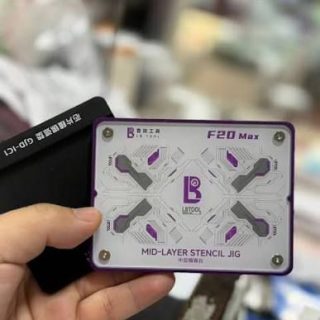 LB MID-LAYER STENCIL JIG F20Max
₨ 2,500.00
LB MID-LAYER STENCIL JIG F20Max
₨ 2,500.00
-
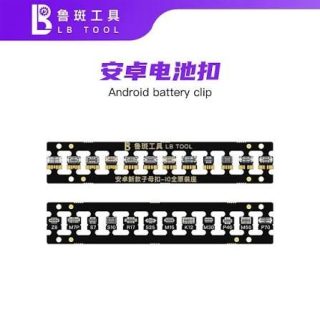 LB Android battery clip
₨ 3,000.00
LB Android battery clip
₨ 3,000.00